Enzyme Breaker Supplier for Oilfield Fluids
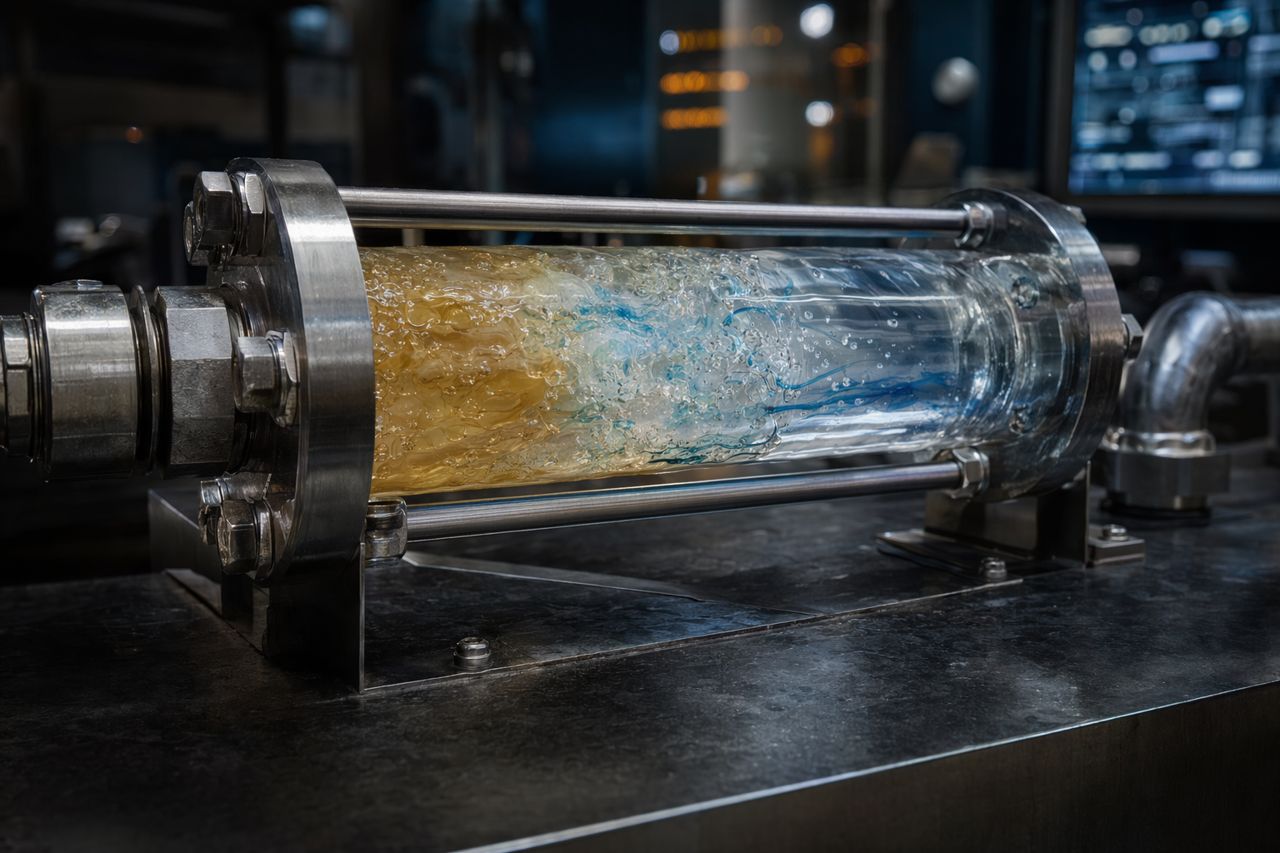
Guar-based fracturing fluids are still widely used because they build viscosity efficiently, carry proppant, and fit established service-company workflows. The challenge is cleanup. A breaker must reduce viscosity at the right point in the job: late enough to preserve transport during pumping, and early enough to support flowback, conductivity, and residue control after placement.
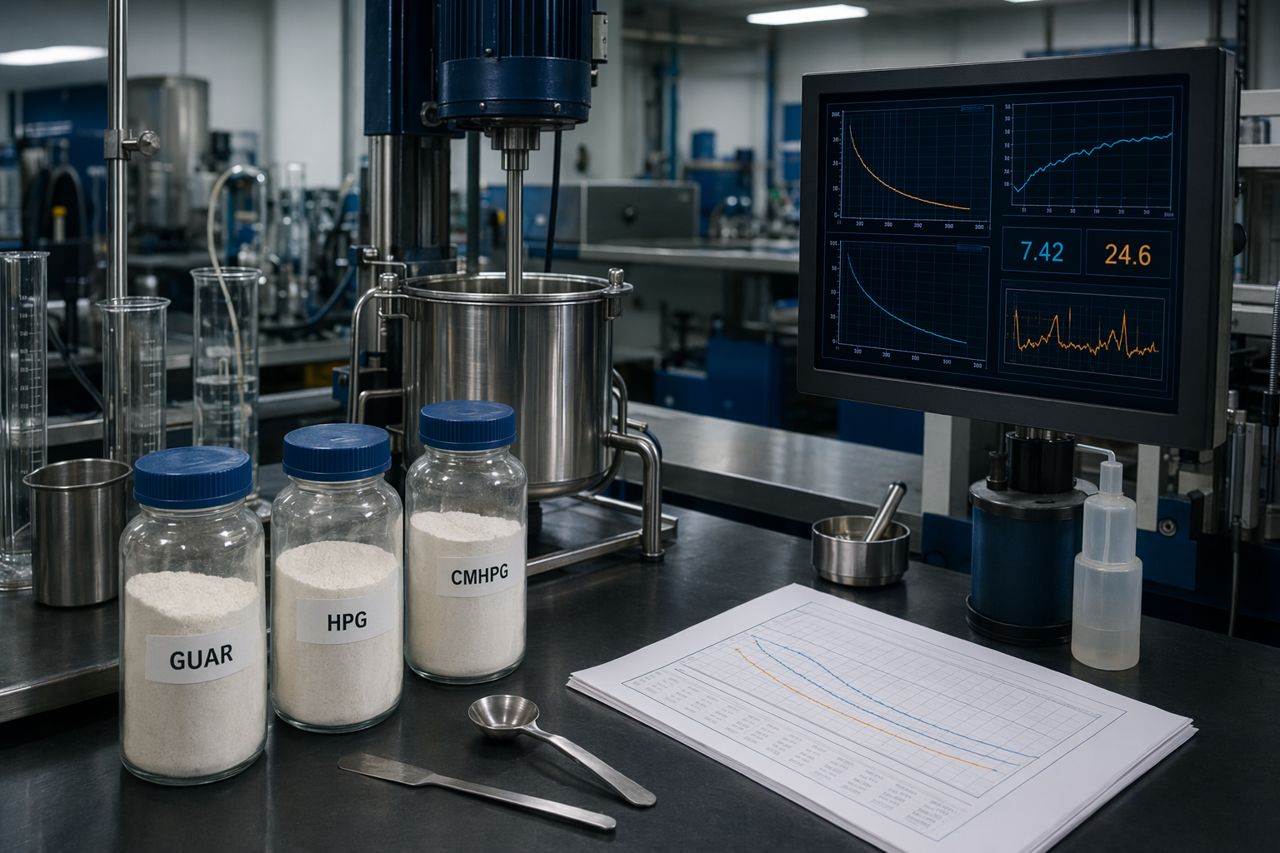
FracTide Labs supplies enzyme breaker solutions for oilfield chemical service companies formulating around guar, HPG, and CMHPG fluid systems. Our role is practical: help product managers and formulation teams identify enzyme breaker options that fit the target fluid design, operating window, additive package, and commercial supply requirements.
We do not position enzyme breakers as universal drop-ins. Performance depends on polymer type, pH, temperature, salinity, crosslinking chemistry, residence time, and how the breaker is combined with the rest of the frac-fluid package. The right selection starts with the field conditions and the desired break profile.
Where Enzyme Breakers Fit in Guar-Based Fracturing Fluids
Enzyme breakers are used to cleave guar-derived polymers under controlled conditions. In the field, they are typically evaluated for:
- Delayed viscosity reduction after proppant placement
- Cleaner gel cleanup compared with an uncontrolled break
- Compatibility with common fracturing-fluid additives
- Break timing that can be adjusted through formulation strategy
- Support for lower-residue cleanup programs where applicable
- Use alongside oxidizers or encapsulated breakers in staged breaker designs
For oilfield chemical suppliers, the purchase decision is not only chemical performance. It is also whether the breaker can be supplied consistently, blended predictably, documented clearly, and supported through lab and field validation.
Guar, HPG, and CMHPG: What Changes for Breaker Selection
Guar
Standard guar systems are common, cost-effective, and familiar to field crews. Enzyme breaker selection for guar often focuses on reliable viscosity reduction without excessive early thinning. Key inputs include hydration quality, polymer loading, pH adjustment, fluid residence time, and expected bottomhole temperature.
HPG
Hydroxypropyl guar systems are used where modified hydration and fluid behavior are needed. Enzyme compatibility should be checked against the full additive package, especially buffers, crosslinkers, surfactants, biocides, and salts. Break timing can shift when the polymer modification, pH, or salinity changes.
CMHPG
Carboxymethyl hydroxypropyl guar systems can deliver useful fluid properties in more demanding designs, but they also require more careful breaker matching. Enzyme selection should account for pH tolerance, crosslinker selection, delayed-break expectations, and the possibility of using a blended breaker strategy rather than relying on one mechanism.
Operating Window Inputs We Ask For
To recommend candidate breaker options, FracTide Labs typically requests the following formulation and job parameters:
- Base polymer: guar, HPG, CMHPG, or blend
- Polymer loading and hydration method
- Target viscosity profile during mixing, pumping, and shut-in
- Bottomhole temperature range
- Fluid pH during hydration, crosslinking, and break
- Water source, salinity, hardness, and brine type
- Crosslinker chemistry and loading range
- Buffer system and pH control approach
- Biocide, clay control, scale control, friction reducer, surfactant, and flowback aid package
- Planned breaker architecture: enzyme only, enzyme plus oxidizer, encapsulated breaker, or staged breaker blend
- Desired break timing and cleanup target
- Lab test protocol used by your technical team
- Expected monthly or quarterly commercial demand
This information helps narrow the selection before lab screening, reducing wasted formulation cycles and improving the odds that a candidate enzyme breaker will fit the real fluid system.
Breaker Timing: The Commercial Problem Behind the Chemistry
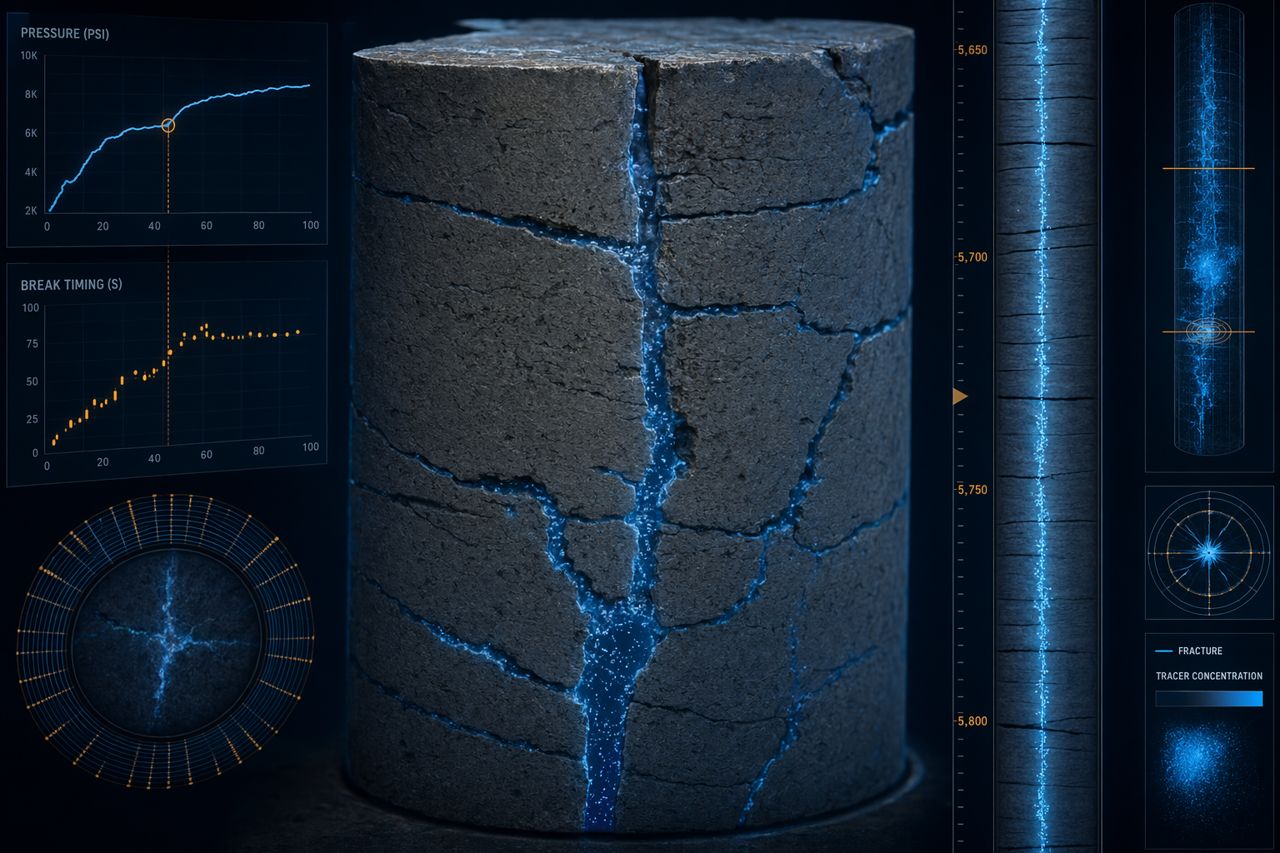
For product managers, breaker timing is where technical risk becomes commercial risk. If the system breaks too early, the fluid may lose carrying capacity before placement. If it breaks too late, cleanup can be slower and conductivity may be affected. If it is inconsistent across water sources or temperature ranges, the product becomes difficult to deploy across basins.
A strong enzyme breaker program should support:
- Predictable delay under the target pH and temperature window
- Controlled viscosity reduction after placement
- Compatibility with selected crosslinker and buffer systems
- Practical dosing flexibility for different job designs
- Stable supply for field-scale blending and repeat orders
- Documentation that supports internal qualification and customer discussions
FracTide Labs helps oilfield chemical teams evaluate enzyme breaker candidates with those commercial requirements in mind.
Compatibility with Common Fracturing-Fluid Systems
Enzyme breaker performance can be influenced by the surrounding chemistry. We support compatibility discussions for systems that may include:
- Borate or organometallic crosslinkers
- pH buffers and delay agents
- Biocides and microbial control packages
- Clay stabilizers and salt-sensitive additives
- Friction reducers and hybrid slickwater/gel approaches
- Surfactants, mutual solvents, and flowback aids
- Scale inhibitors and corrosion inhibitors
- Oxidizing breakers or encapsulated breaker components
- Produced-water or high-TDS source water considerations
The objective is not to force a single breaker into every fluid. The objective is to select a breaker strategy that works with the formulation the service company actually intends to sell and pump.
Enzyme Breakers Versus Oxidizers
Oxidizing breakers remain common in hydraulic fracturing because they are familiar, robust, and cost-effective in many systems. Enzyme breakers are considered when a more targeted polymer breakdown profile is useful, when residue control is important, or when a formulation team wants another lever for delayed cleanup.
Many commercial programs use both approaches. An enzyme may provide controlled polymer-specific breakdown, while an oxidizer or encapsulated breaker may be used to extend cleanup under higher-temperature or longer-residence conditions. FracTide Labs can support enzyme selection within that broader breaker architecture.
Supply Reliability for Oilfield Chemical Suppliers
A good lab result is not enough. Oilfield chemical suppliers need breaker ingredients that can move from bench qualification to field orders without creating procurement risk.
FracTide Labs supports B2B customers with:
- Commercial quote support for formulation programs
- Lot-to-lot consistency expectations for purchasing teams
- Documentation for internal qualification
- Packaging discussions for blending and warehouse operations
- Forecast-based supply planning
- Technical coordination during lab screening and field validation
- Clear communication on lead times and fit-for-use constraints
If your team is replacing an existing breaker, extending a product line, or building a new guar-based fluid package, we can help define the candidate profile before procurement commits to volume.
Field Validation Approach
Field validation should be staged. We recommend moving through a practical sequence:
- Define the fluid system and target operating window.
- Select candidate enzyme breaker options based on polymer, pH, temperature, salinity, and additive package.
- Screen candidates against your internal viscosity and break-timing procedures.
- Check compatibility with the full additive package, not just the polymer solution.
- Confirm handling, blending, storage, and logistics requirements.
- Run field trials with agreed success criteria.
- Review results and refine the recommended breaker range for commercial deployment.
FracTide Labs supports this process as a supplier and technical partner, while your service company maintains control of final fluid design and field execution.
What Makes a Good Fit for FracTide Labs
We are a strong fit when your team needs:
- An enzyme breaker supplier focused on oilfield fluids
- Support for guar, HPG, or CMHPG fracturing systems
- Technical discussion before quote generation
- Candidate selection based on actual operating conditions
- Compatibility review with common frac-fluid additives
- Commercial supply planning beyond sample evaluation
- Direct communication with formulation and procurement teams
We are not the right fit for vague, one-off requests with no fluid conditions, no target break timing, and no commercial path. The more complete the job and formulation data, the faster we can identify a practical route forward.
Request a Quote
Send your target polymer system, operating window, additive package, and expected supply requirement. FracTide Labs will review the application and respond with the most relevant enzyme breaker options for quote discussion.
Request a quote using the on-site form
Please include, if available: polymer type, pH range, bottomhole temperature range, salinity or water source, crosslinker package, desired break timing, and estimated order volume.