Field Mixing Equipment: How Hydration, Shear, and Dosing Accuracy Affect Breaker Performance
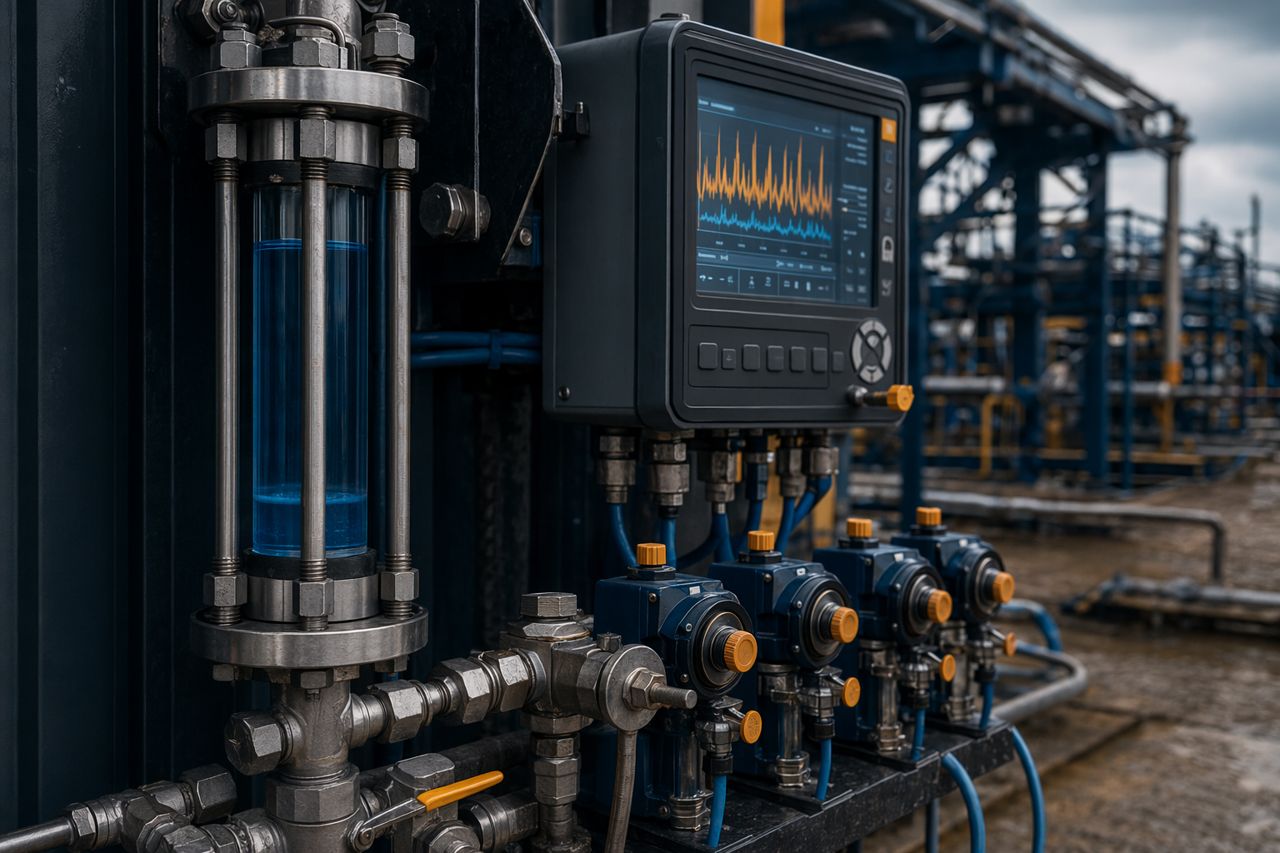
For an oilfield chemical service company, breaker performance is not determined by chemistry alone. The field mixing package, hydration discipline, blender configuration, chemical metering health, and job execution all influence whether a breaker delivers the intended viscosity reduction at the intended point in the fracture.
That matters for product managers and technical service teams selecting an enzyme breaker supplier for oilfield fluids. A breaker that looks appropriate on paper can underperform when polymer hydration is incomplete, when chemical pumps drift, when water quality shifts, or when shear history changes the fluid before it reaches the formation.
FracTide Labs supports enzyme breaker programs with formulation-fit guidance, compatibility screening, practical operating-window discussion, and supply continuity for oilfield chemical suppliers and service companies. The goal is controlled cleanup support without forcing a field team into unrealistic mixing requirements.
{{< video-embed id="field-mixing-equipment-breaker-performance" title="Faceless explainer: field mixing equipment and breaker performance" >}}
Why field equipment changes breaker behavior
Enzyme breakers are typically evaluated as part of a fluid system, not as isolated ingredients. In the field, the system is shaped by several variables before it enters the wellbore:
- Polymer hydration quality
- Shear exposure through hydration units, centrifugal pumps, and blender tubs
- Dosing accuracy from liquid additive systems
- Crosslinker timing and gel development
- Water chemistry, salinity, and pH drift
- Temperature profile and residence time
- Order of addition and chemical contact time
- Transfer-line layout and dead-volume management
When any of these variables moves, apparent breaker timing can move with it. The most reliable programs treat field equipment as part of the formulation environment.
Hydration quality sets the starting line
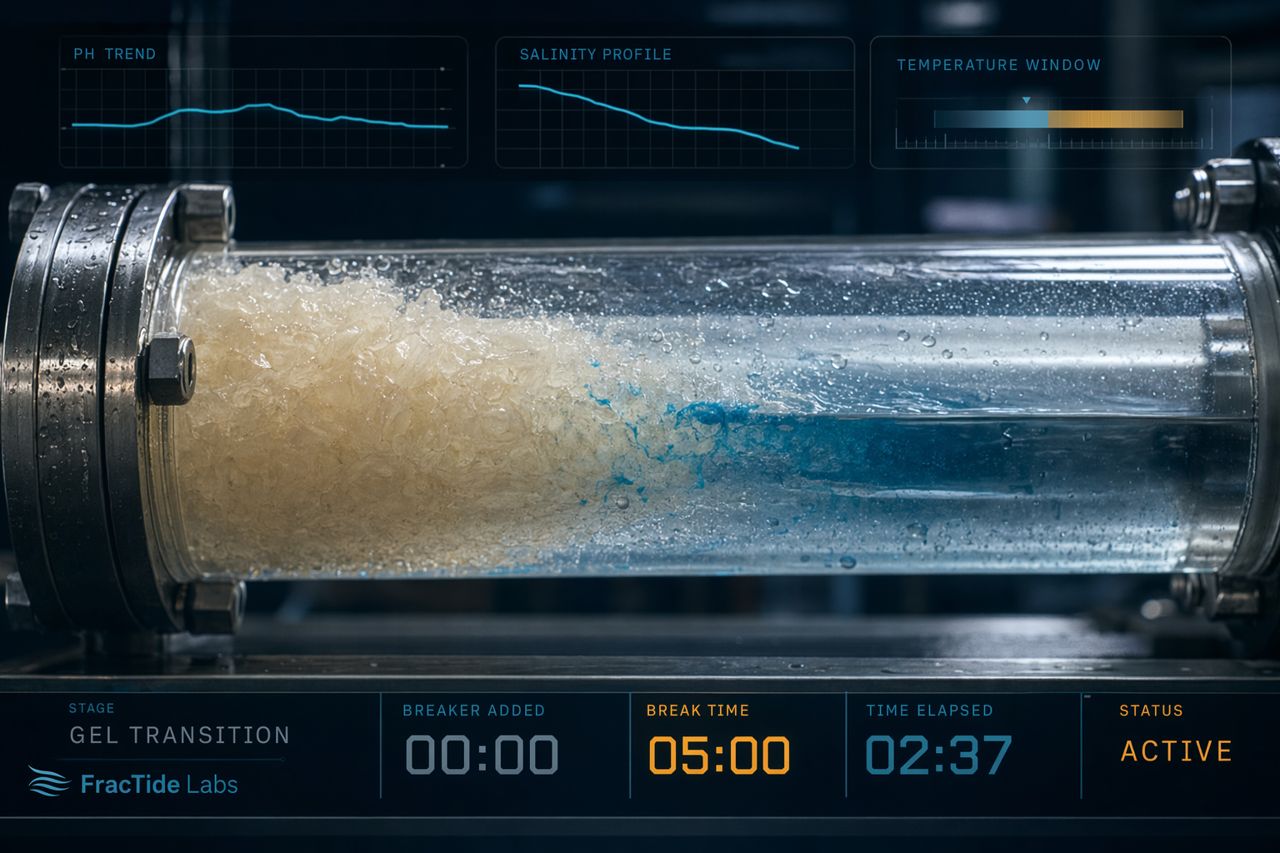
A breaker cannot correct a poorly hydrated fluid. If polymer is under-hydrated before crosslinking or before downhole placement, the fluid may show inconsistent viscosity, fisheyes, delayed gel development, or uneven additive distribution. These issues can be misread as breaker inconsistency, even when the breaker is performing as expected.
Common hydration-related failure modes
- Short hydration time: Polymer enters the blender before it has fully developed structure.
- Uneven wetting: Dry polymer agglomerates create local pockets that respond differently to breaker chemistry.
- Water-quality swings: Source changes alter hydration speed, crosslink response, and breaker timing.
- High recirculation stress: Excessive mechanical handling can change the polymer state before treatment begins.
For product teams, the practical question is not simply whether an enzyme breaker can reduce viscosity. The question is whether it can perform predictably across the hydration conditions your service crews actually run.
Shear history affects the fluid the breaker sees
Shear is unavoidable in fracturing operations. Hydration equipment, transfer pumps, blender paddles, suction lines, tub agitation, and high-pressure pumps all contribute to the fluid’s mechanical history.
Moderate shear can improve dispersion and process consistency. Excessive or inconsistent shear can produce variable gel structure, premature viscosity loss, or a fluid that appears easier to break because it has already been mechanically degraded. In that situation, the breaker may receive credit or blame for behavior caused upstream.
What to review with field operations
- Hydration-unit configuration and residence profile
- Pump type and recirculation practices
- Blender tub level control and agitation intensity
- Transfer distance from hydration to blender
- Any changes between yard trials and live jobs
- Whether the same equipment package is used across basins
A robust enzyme breaker recommendation should account for the shear environment, not assume a perfect laboratory mixing sequence.
Dosing accuracy is a commercial performance issue
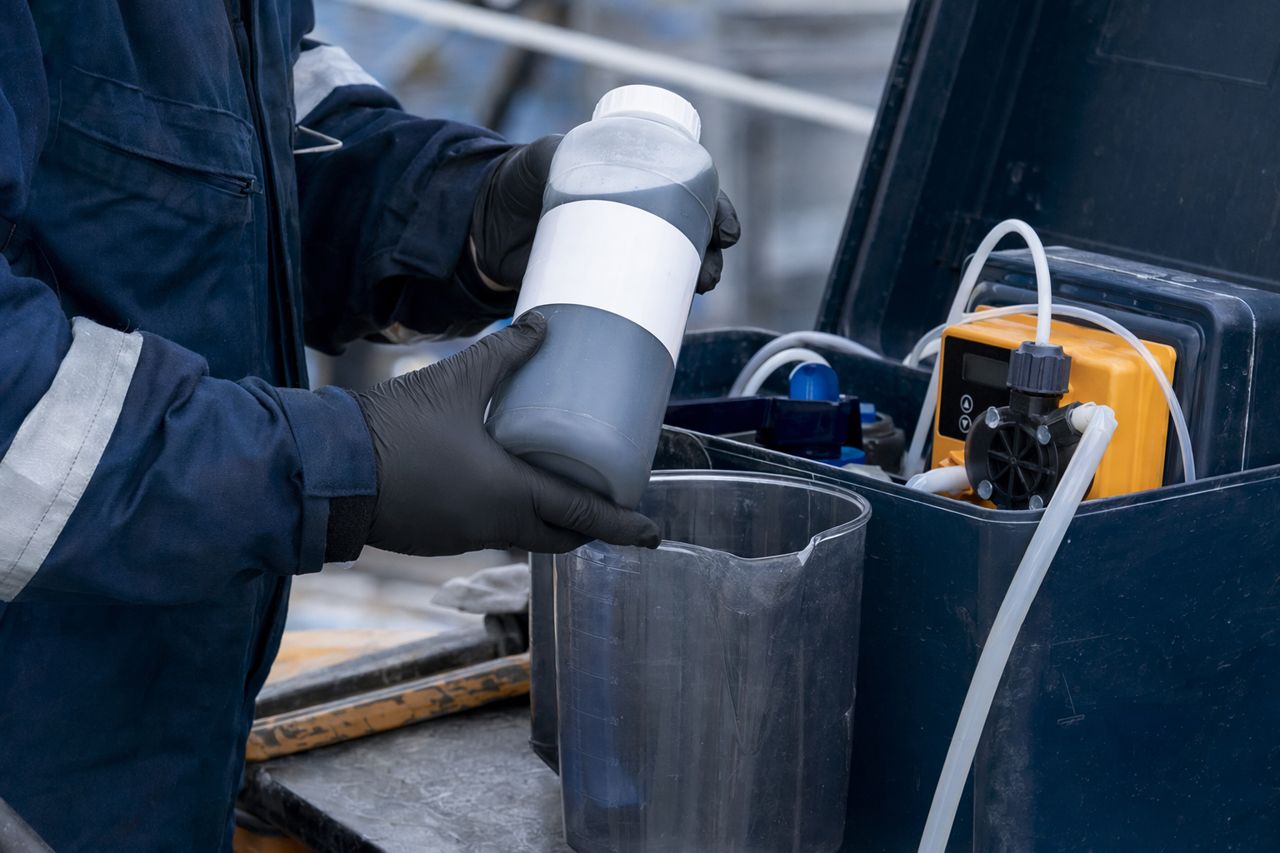
Chemical metering accuracy directly affects breaker timing. Underfeed can leave excess viscosity and residue risk. Overfeed can move cleanup earlier than planned, potentially affecting proppant transport and fluid placement.
For service companies, the dosing system is also a cost-control device. A breaker program that requires an extremely narrow feed window may be difficult to execute under changing field conditions. A practical program should tolerate normal operating variation while still supporting predictable cleanup.
Field checks that reduce breaker variability
- Confirm additive pump calibration before critical stages.
- Track actual chemical drawdown against the treatment schedule.
- Verify suction-side restrictions, tote changeover procedures, and line priming.
- Keep breaker feed points consistent between trial and commercial jobs.
- Document delays, shutdowns, and restart procedures that alter residence time.
These checks are not cosmetic. They determine whether the breaker concentration placed in the fluid matches the design intent.
Order of addition can change compatibility
Enzyme breakers are commonly formulated into broader fluid programs that may include hydration aids, buffers, biocides, scale-control components, friction reducers, clay stabilizers, crosslinkers, surfactants, and flowback aids. The order in which these chemistries meet can influence compatibility.
A breaker that is stable in one additive sequence may behave differently if added earlier, exposed longer to a concentrated chemical stream, or mixed into a fluid before pH adjustment. This is especially relevant when service companies adapt equipment layouts or consolidate additive lines.
Practical compatibility questions
- Where is the breaker introduced relative to hydration and crosslinking?
- Does it contact concentrated additives before dilution?
- Is the breaker fed continuously or staged into selected intervals?
- Are there shut-in or standby periods where contact time increases?
- Does the same sequence apply during pad, slurry, flush, and displacement stages?
FracTide Labs helps customers review these questions during product selection and field validation planning.
Breaker timing depends on the full operating window
Enzyme breaker timing is influenced by temperature, pH, salinity, polymer type, fluid structure, residence time, and additive package. Field mixing equipment determines how consistently those conditions are created before the fluid goes downhole.
A controlled breaker program should define a realistic operating window rather than relying on a single idealized condition. That window should include expected water variability, common fluid-system chemistries, and the practical dosing range available on the service company’s equipment.
What product managers should ask a breaker supplier
When evaluating an enzyme breaker supplier for oilfield fluids, product managers should look beyond generic product descriptions. Useful supplier conversations should cover formulation fit, execution constraints, and validation support.
Supplier evaluation checklist
- Does the breaker match the polymer and fluid architecture being used?
- Has compatibility been reviewed with common crosslinkers, buffers, and field additives?
- Can the supplier discuss operating windows without overpromising universal performance?
- Is the product suitable for the intended dosing strategy and equipment layout?
- Can the supplier support field trial planning and post-job troubleshooting?
- Is supply reliability strong enough for basin-level service activity?
- Are packaging, storage, and handling expectations practical for chemical yards and field crews?
The right answer is rarely a single product claim. It is a chemistry-and-execution fit.
Field validation: connect the lab, the yard, and the job
Good validation uses staged evidence. Start with representative fluid formulations. Move to yard mixing where hydration and metering equipment are closer to field reality. Then confirm during controlled field use with clear documentation of water source, additive sequence, pump performance, and operational interruptions.
Data worth capturing during validation
- Fluid recipe and additive order
- Hydration equipment and residence profile
- Breaker feed point and dosing method
- Water source and treatment notes
- Observed gel development before pumping
- Stage timing, shutdowns, and restarts
- Flowback or cleanup indicators relevant to the operator’s objectives
This level of documentation helps separate chemistry performance from execution variability.
How FracTide Labs supports service-company execution
FracTide Labs supplies enzyme breaker solutions for oilfield chemical suppliers and service companies that need dependable formulation components, not vague claims. Our support is built around field fit:
- Enzyme breaker selection aligned to common fracturing-fluid systems
- Compatibility discussion with broader additive packages
- Guidance on breaker timing considerations across practical operating windows
- Supply planning for repeatable commercial programs
- Technical support for field validation and troubleshooting
- Commercial responsiveness for product managers managing active service demand
We do not position enzyme breakers as a cure for every fluid-design issue. We help customers build breaker programs that match the equipment, chemistry, and execution environment they actually operate.
Request a quote
If you are developing, replacing, or qualifying an enzyme breaker for a fracturing-fluid program, FracTide Labs can help you evaluate formulation fit, supply availability, and field-validation needs.
Request a quote through our on-site contact form and include your fluid type, target operating window, additive package, and expected service-region requirements.